
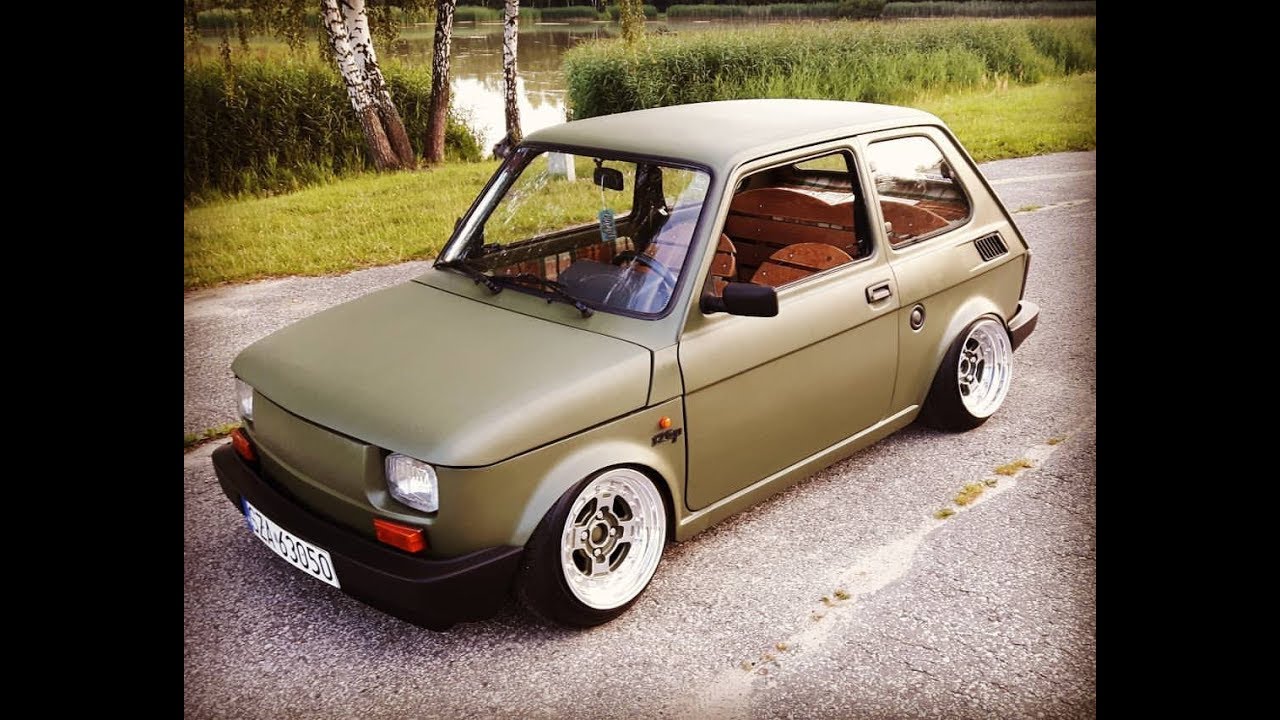
Fiat 126
The Fiat 126, a city car with a rear-engine layout, was a significant model for Fiat and became an icon in several countries, most notably Poland. Here’s a breakdown of its history:
Origins and Launch:
- Successor to the Fiat 500: The Fiat 126 was designed to replace the immensely popular Fiat 500. While it retained the wheelbase and many mechanical underpinnings of the 500, it featured a new, more modern, and angular body shell, reflecting the design trends of the early 1970s. The design work is credited to Sergio Sartorelli.
- Debut: It was officially introduced at the Turin Auto Show in October 1972. For a few years, it was sold alongside the final version of the Fiat 500 R.
- Design Philosophy: The aim was to offer a practical, affordable, and economical city car, continuing the tradition of Fiat’s small cars. Safety was also a consideration, with improvements like a repositioned fuel tank (under the rear seat for better protection) and a collapsible steering column.
Production and International Variants:
- Italian Production: Initial production began in Italy in 1972 at Fiat’s Cassino and Termini Imerese plants. Italian production of the 126 ran until 1980.
- Polish Production (Polski Fiat 126p): A crucial part of the 126’s history is its licensed production in Poland by Fabryka Samochodów Małolitrażowych (FSM), starting in June 1973. The Polish-made version was known as the Polski Fiat 126p.
- The first cars were assembled from Italian parts, but FSM quickly moved to full local production.
- Factories in Bielsko-Biała and later Tychy were central to its manufacturing.
- The 126p became a true “people’s car” in Poland, mobilizing the nation and earning the affectionate nickname “Maluch” (meaning “little one” or “toddler”). This nickname became so popular that it was officially added to the car’s badging in 1997.
- Polish production continued long after it ceased in Italy, lasting until September 22, 2000. Over 3.3 million units were produced in Poland.