
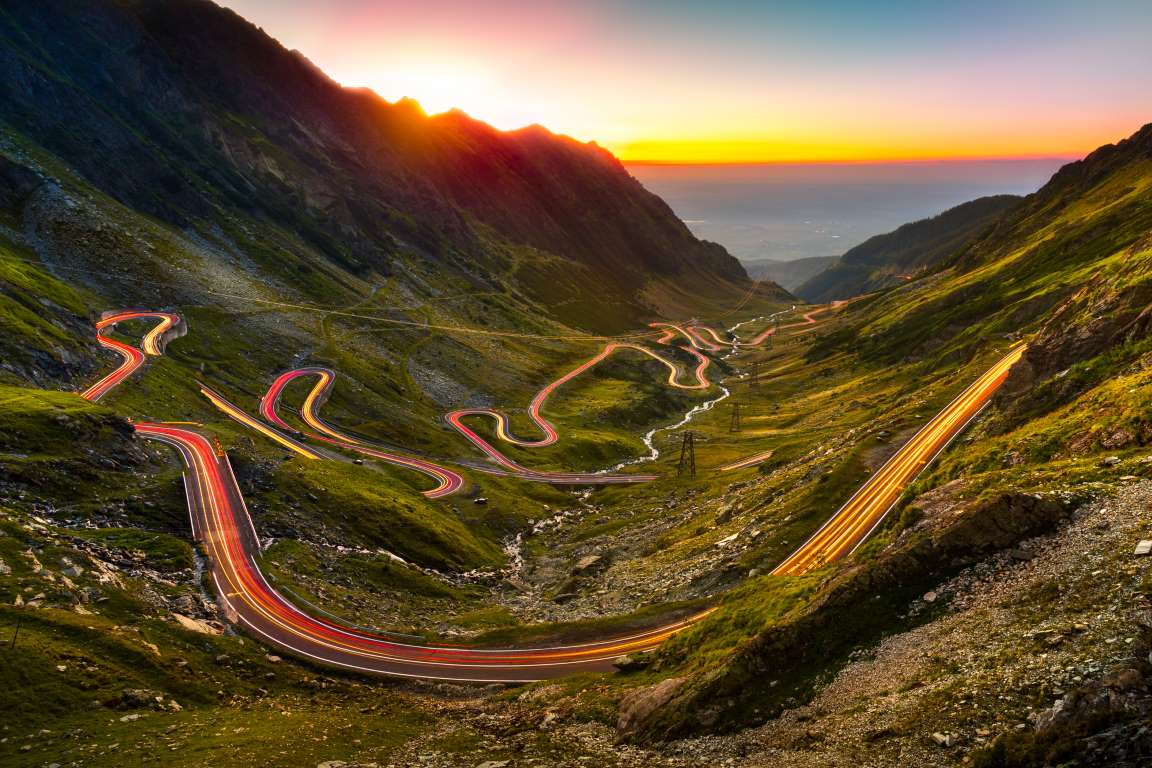

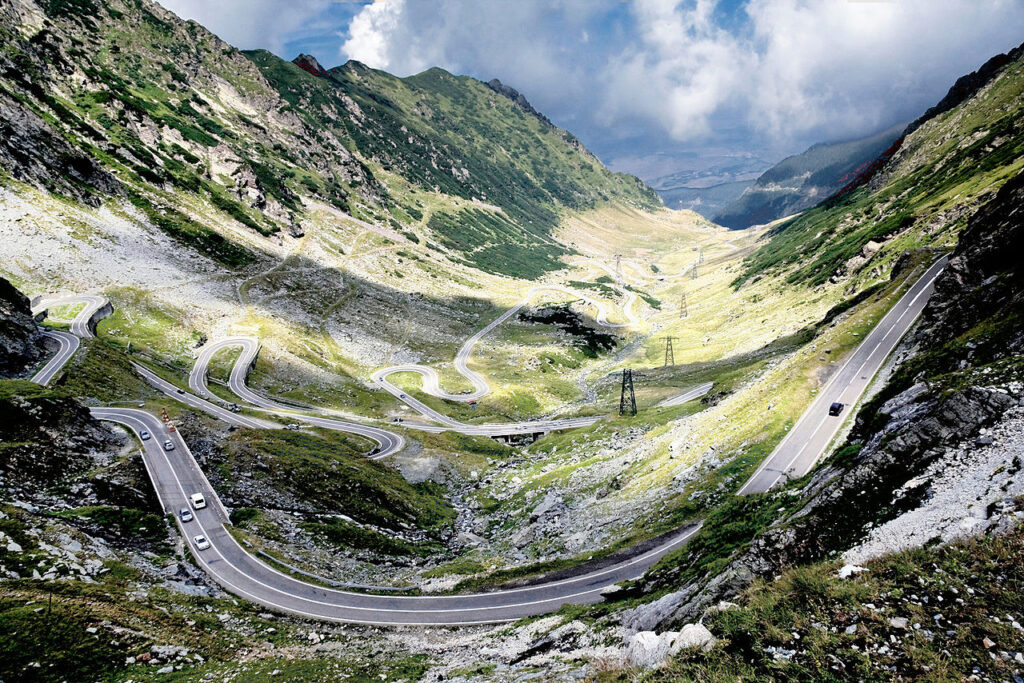
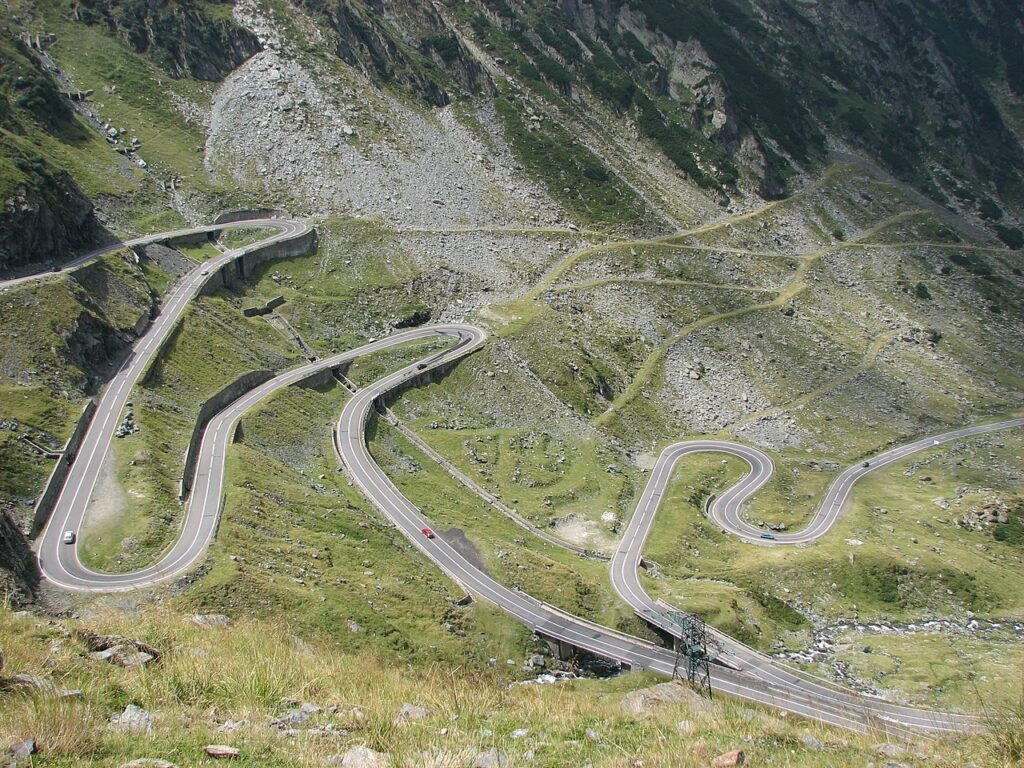
The Transfăgărășan was constructed between 1970 and 1974 during the rule of Nicolae Ceaușescu as a response to the 1968 invasion of Czechoslovakia by the Soviet Union.[2] Ceaușescu wanted to ensure quick military access across the mountains in case of a Soviet invasion. At the time, Romania already had several strategic mountain passes through the Southern Carpathians, whether inherited from the pre-communist era (the DN1 and the high-pass DN67C) or built during the initial years of the Communist regime (the DN66). These passes, however, were mainly through river valleys, and would be easy for the Soviets to block and attack. Ceaușescu therefore ordered the construction of a road across the Făgăraș Mountains, which divide northwestern and southern Romania.[1][2]

Built mainly by military forces, the road had a high financial and human cost. Work was carried out in an alpine climate, at an elevation of 2,000 metres (6,600 ft), using roughly six million kilograms (5,900 long tons; 6,600 short tons) of dynamite, and employing junior military personnel who were untrained in blasting techniques. Many workers died; official records state that only 40 soldiers lost their lives, but unofficial estimates by workers put the number in the hundreds.[2]
The road was officially opened on 20 September 1974, although work, particularly paving of the roadbed, continued until 1980.

Atlantic Integrations
Atlantic integrates top open-source marketing software with critical marketing tech tools to ensure clean analytics and reporting.

Product Title
The description goes here on multiple lines if needed.

Product Title
The description goes here on multiple lines if needed.
Product Title
The description goes here on multiple lines if needed.

Product Title
The description goes here on multiple lines if needed.