The Fiat 126: A Global People’s Car – History and Technical Analysis
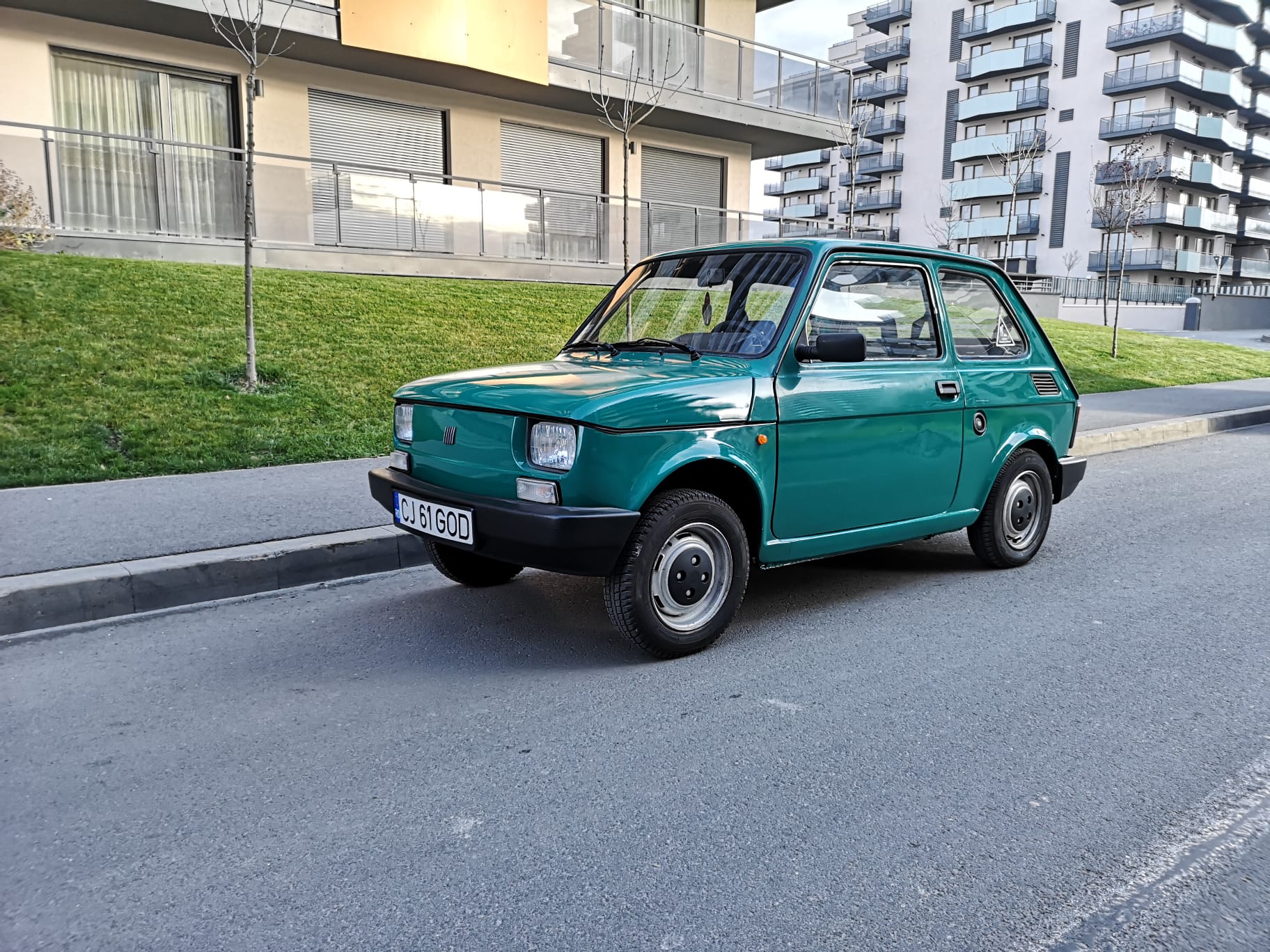
The Fiat 126 is a fascinating example of a mass-produced city car that achieved disproportionate cultural significance, particularly in Eastern Europe. Launched in 1972 as the successor to the legendary Fiat 500, the 126 was designed to modernize the popular rear-engine layout for the 1970s while retaining the core principles of simplicity, affordability, and compact size.
Development and Production History
The Fiat 126 was officially unveiled at the Turin Motor Show in 1972. It was intended to replace the iconic Fiat 500, sharing its basic rear-engine, rear-wheel-drive (RR) mechanical layout and wheelbase. However, the bodywork was entirely new, featuring the sharp, squared-off lines characteristic of 1970s design, inspired in part by the 1968 Fiat City Taxi concept by Pio Manzù.
Key milestones include:
- 1972: Production begins in Italy at the Cassino plant.
- 1973: Production begins in Poland under license by Fabryka Samochodów Małolitrażowych (FSM), where it was marketed as the Polski Fiat 126p. This model quickly became a symbol of Polish motorization and was affectionately nicknamed the “Maluch” (meaning “toddler” or “small one”).
- 1977: The original 594 cc engine is replaced by a slightly larger 652 cc unit.
- 1980: Production ceases in Italy after approximately 1,352,912 units were built, but continues in Poland.
- 1987: The significant Fiat 126 BIS is introduced. This variant featured a water-cooled, horizontally mounted 704 cc engine, which allowed for a redesigned rear with a proper third door (hatchback) to access additional cargo space.
- 1994: The Polish model is updated to the 126p ‘el’ version, incorporating parts from the new front-wheel-drive Fiat Cinquecento to simplify production.
- 1997: A model with a catalytic converter is introduced.
- 2000: Final production ends in Poland, resulting in a remarkable 28-year production run with over 3.3 million Polski Fiat 126p units built.
In total, over 4.6 million Fiat 126 units were produced worldwide (Italy, Poland, and limited assembly in Austria and Yugoslavia).
⚙️ Key Technical Data and Variants
The Fiat 126’s mechanical architecture was an evolution of the Fiat 500’s, prioritizing simplicity and low maintenance.
Engine and Powertrain Specifications
| Variant | Production Years | Displacement | Configuration | Cooling | Power Output (DIN) | Max Torque (DIN) | Drivetrain |
| Initial 126 | 1972–1977 | 594 cm | Inline 2, OHV | Air-cooled | 17 kW / 23 hp @ 4800 rpm | 39 Nm (29 lb.f) | Rear-engine, RWD |
| Standard 126 | 1977–2000 | $652 cm | Inline 2, OHV | Air-cooled | 18 kW 24 hp @ 4500 rpm | 43 Nm (32 lb.f) | Rear-engine, RWD |
| 126 BIS | 1987–1991 | $704 cm | Flat 2, OHV | Water-cooled | 19 kW 26 hp @ 4500 rpm | 49Nm (29 lb.f) | Rear-engine, RWD |
Chassis and Performance (Typical 652 cc Model)
| Feature | Specification |
| Body Type | 2-door City Car / Hatchback (BIS) |
| Length | 3054 mm |
| Width | 1378 mm |
| Wheelbase | 1840 mm |
| Curb Weight | 580 – 620 kg |
| Transmission | 4-speed Manual (Synchromesh on 2nd, 3rd, and 4th gear) |
| Brakes | Drum brakes all around (Front discs were a common upgrade) |
| Front Suspension | Independent, Transverse Leaf Spring (Early Models) / McPherson Strut (Later BIS/EL) |
| Rear Suspension | Independent, Coil Springs with Torsion Bar (BIS/EL had Coil Springs) |
| Top Speed | ~105 – 110 km/h |
| 0-100 km/h | ~ 39 – 48 seconds |
Safety and Modernization
A key goal for the 126 compared to the 500 was enhanced safety and practicality.
- Improved Safety: Features included a safer, more central location for the fuel tank (under the rear seat), a collapsible steering column, and dual-circuit brakes on later models.
- Interior Space: The new boxier body maximized interior space while keeping the external dimensions minimal. The repositioning of the starter motor allowed the rear seat and bulkhead to be shifted rearward by approximately $10 \text{ cm}$, improving rear legroom.
- The BIS Model: The 126 BIS was the most significant technical evolution, switching to a water-cooled engine. Crucially, by mounting the engine horizontally, a small luggage compartment with a true rear hatch was created, significantly boosting the car’s practicality.
The Fiat 126 remains a testament to durable, minimalist engineering, successfully motorizing millions and enduring as a classic piece of automotive history, particularly under its Polish moniker, the “Maluch.”